
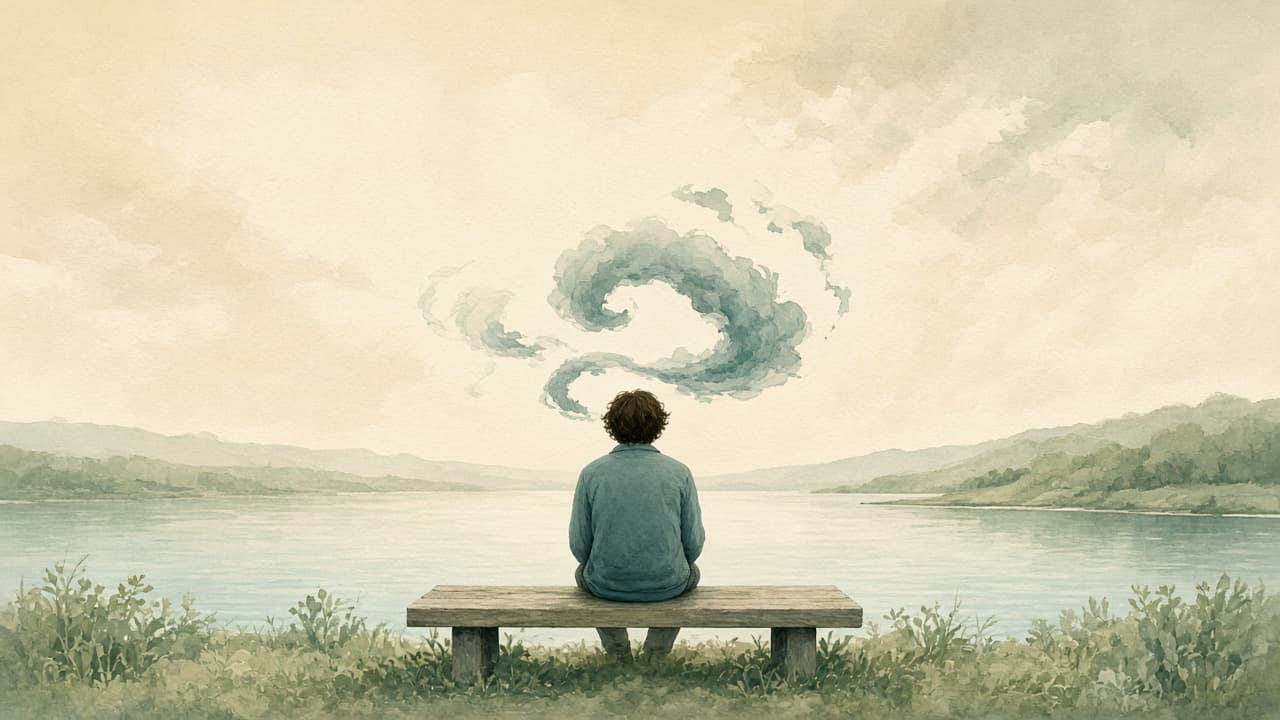
Anger rumination: why can I not let go of my anger?
Constantly thinking about upsetting events and arguments that are long over. What anger rumination is, its four faces, and how to step out of the cycle.
The argument ended days ago, but your mind has not let it go. You go over what you should have said, keep arguing with the other person in your head, or see the same scene again at night before falling asleep. If this sounds familiar, you may be dealing with what psychologists call "anger rumination".
What is anger rumination?
Anger rumination means thinking repeatedly, and often unwillingly, about situations that made you angry, long after they are over. Anger itself is a normal and sometimes useful emotion: it tells us a boundary has been crossed or an injustice has happened. The problem starts when the mind keeps returning to it and, each time, brings the anger back to life.
Why can I not let go of my anger?
The mind sometimes replays hurtful situations to understand them, find meaning in them or regain a sense of control. But research shows that this repeated replaying rarely leads to a solution; instead, it tends to make anger last longer and feel stronger. Anger rumination is linked to sleep problems, tension in relationships, stress and difficulty forgiving.
The four faces of anger rumination
In 2001, researchers at Yale published the Anger Rumination Scale (ARS), which separates four aspects of this pattern:
- Angry afterthoughts: replaying the scene, continuing the argument in your imagination
- Thoughts of revenge: thinking about getting even, difficulty forgiving
- Angry memories: old memories that still make you angry coming back
- Understanding of causes: endlessly analysing "why did this happen to me?"
Knowing which aspect is strongest for you helps you choose the right strategy. The anger rumination test (ARS) has 19 questions and shows your score on all four. It is not a diagnosis, it does not measure aggression, and no clinical cutoffs have been published for it; it simply gives a picture of your thinking pattern.
Anger in hard collective times
For many Iranians, anger is not only about personal arguments. Social injustice, painful news and a sense of helplessness from far away can create anger that has nowhere to go and keeps repeating in the mind. The article Suppressed anger and anxiety in a crisis is about this experience.
How to step out of the rumination cycle
- Notice it: the first step is realising you are in the loop. Tell yourself: "I am ruminating again."
- Move from "why?" to "what now?": instead of endlessly analysing the cause, ask whether there is something practical you can do.
- Take distance: imagine looking at the situation from the outside, or from years in the future.
- Write it down and close it: put your thoughts on paper fully once, instead of going over them again and again.
- Calm your body: exercise, slow breathing and walking reduce the physical arousal of anger.
- Shift your attention: an absorbing activity, such as a conversation or something you do with your hands, breaks the cycle.
How psychotherapy helps
Cognitive behavioural therapy (CBT) and mindfulness-based approaches help people recognise the rumination pattern and relate differently to angry thoughts. If anger, or repetitive thoughts about it, has troubled you for a long time, affects your sleep, work or relationships, or feels out of your control, talking to a professional can help. At Emotral you can talk with Persian-speaking therapists.
References
- Sukhodolsky, D. G., Golub, A., & Cromwell, E. N. (2001). Development and validation of the anger rumination scale. Personality and Individual Differences, 31(5), 689-700.
- Denson, T. F. (2013). The multiple systems model of angry rumination. Personality and Social Psychology Review, 17(2), 103-123.
- Watkins, E. R. (2008). Constructive and unconstructive repetitive thought. Psychological Bulletin, 134(2), 163-206.