
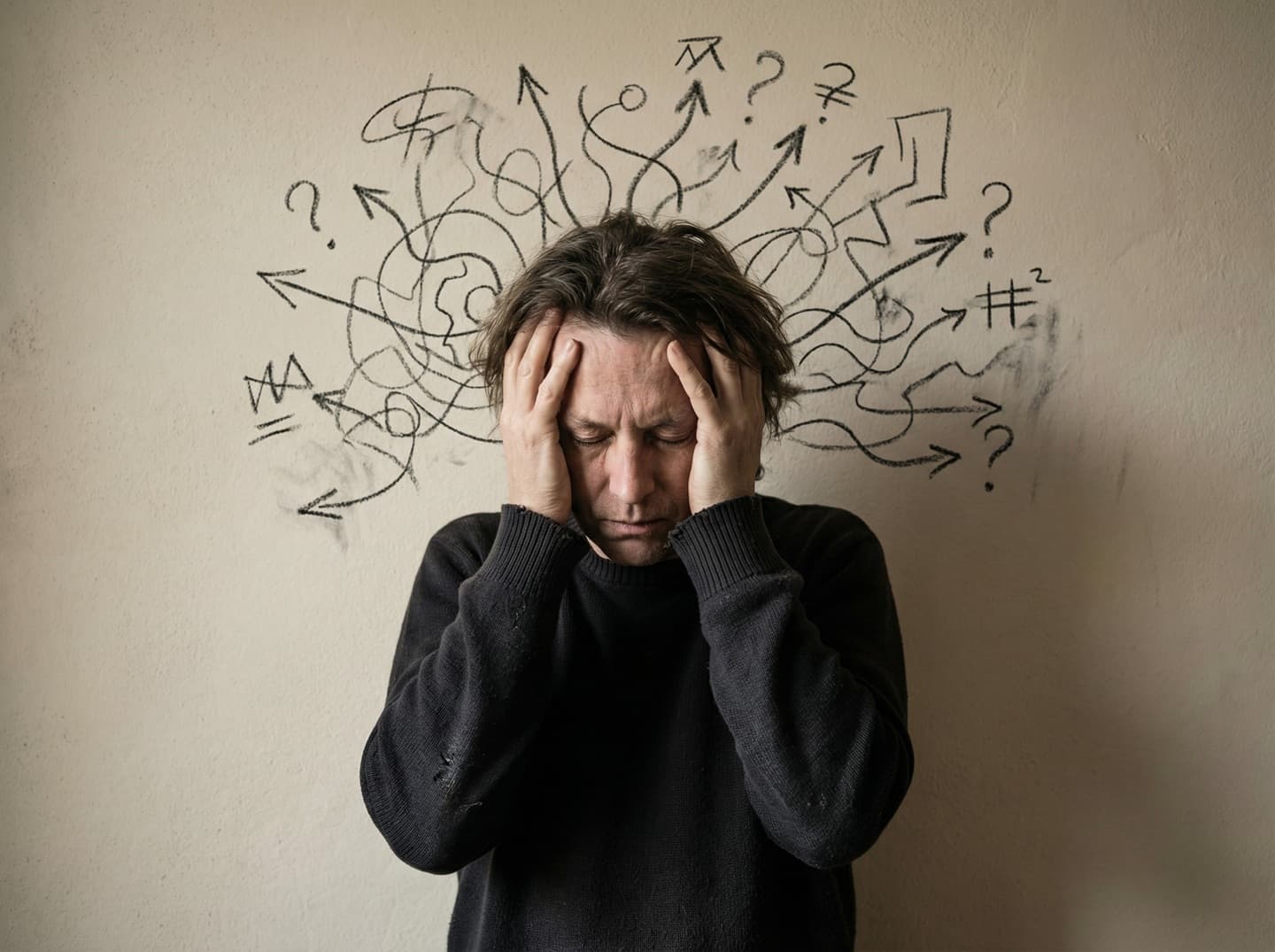
Different psychological reactions to violence and mass killing: Why some don't cry and some fall apart?
In the face of violent events and widespread killings, some people experience emotional collapse, while others appear numb, silent, or "relatively normal." This article explains why these reactions differ and why none of them are a sign of inhumanity or weakness.
When state violence and widespread killing occur, the human mind unconsciously searches for a 'correct' reaction. It's as if we expect collective pain to elicit a uniform collective response: everyone cries, everyone gets angry, everyone collapses. But the human psyche doesn't work that way.
In such situations, what is activated is the logic of survival, not the logic of emotion. The brain first asks: 'How do I survive?' and the answer to this question is different for every body.
For some, tears flow. The body opens a path for release. Crying, trembling, insomnia, and anxiety appear because the nervous system is in a state of hyperarousal. This collapse is not a sign of weakness; it's a sign that the volume of pain has exceeded the psyche's capacity to bear it.
For others, no tears come. Emotions shut down. The person might appear cold, logical, or even emotionless. This state is not indifference or heartlessness; it is protective shutdown. When the brain determines that if you feel everything, you will fall apart, it involuntarily reduces the intensity of the emotional experience.
In this state, parts of the brain responsible for experiencing emotion, pleasure, and connection temporarily have less activity. A person might say: 'I don't feel anything,' but the reality is that emotions haven't been eliminated; they have been postponed. The body tries to survive, even if it means a temporary disconnection from emotional ties.
Emotional numbness is not a sign of 'emotions shutting down,' but rather the result of the nervous system's protective shutdown. When the brain encounters a high volume of threat or violence and sees no way to escape or confront it, it enters a state with only one goal: to prevent collapse.
Another group neither collapses nor becomes numb; instead, they work, analyze, and move forward. High performance, focus on tasks, and control are ways of survival for these individuals. This, too, is a natural reaction, not a denial of pain.
The problem begins when we judge these reactions.
We call crying weakness.
Numbness, heartlessness, and performance, a denial of reality.
While all of these are responses to an inhumane situation.
Organized violence and mass killing put the psyche into a state for which there is no 'normal' reaction. Expecting a normal reaction to an abnormal situation is itself a form of secondary violence.
The important point is this:
If your reaction differs from others, it doesn't mean you suffer less or more. It means your nervous system has chosen a different path for survival.
The danger arises when a state becomes locked for a long time. If emotional numbness persists, it can lead to feelings of emptiness, depression, or emotional disconnection. Continuous collapse can exhaust the body and mind. Even high performance, if without processing, will sooner or later collapse.
Psychological care in such circumstances does not mean 'getting stronger' or 'controlling emotions.' It means gradually restoring a sense of safety to the body; so that the psyche can process what has happened without freezing or collapsing.
Not everyone has to cry.
Not everyone has to be numb.
And no one is obligated to explain their reaction.
When killing and violence occur, a psychological reaction is a sign of being human. Differences in reactions are not differences in value; they are differences in ways of surviving.
If you ever feel your reaction has become unfamiliar or frightening to you, that is precisely the point where support is needed, not judgment.
And this is exactly where therapy finds its meaning.