

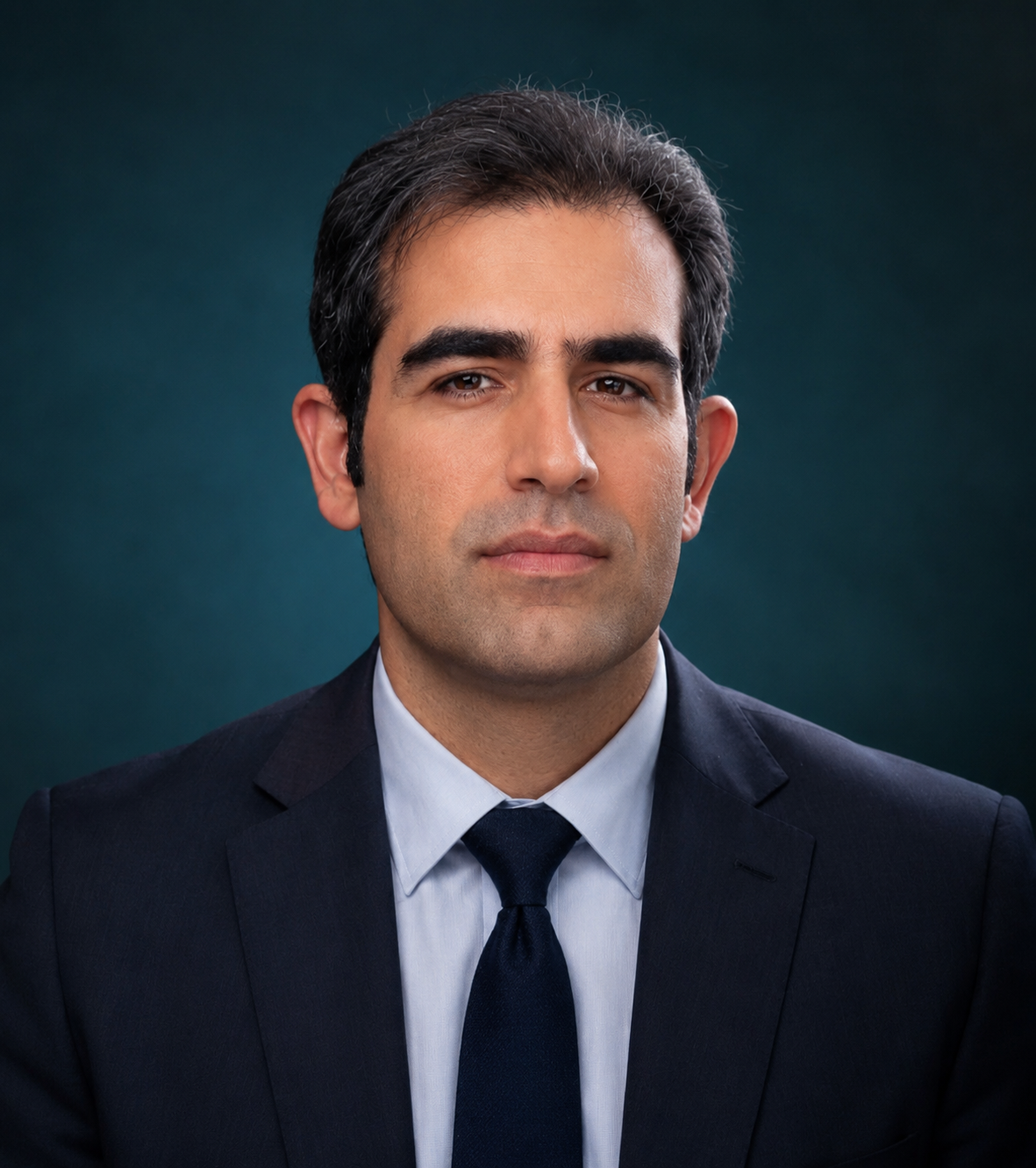
Dr. Jalal Khademi
PhD in Psychology
- Marital Issues
- Infidelity Issues
- Couples Therapy
- Based in Finland
- Session language: English, Persian
- 18 years of experience
- Accepting new clients
Migration, a changed life, emotional conflict or communication problems can put a relationship under strain. Couples therapy is a chance to understand each other better, talk more effectively and make informed decisions about where the relationship goes.
Couples therapy is a form of psychotherapy in which both partners work together with a trained therapist on the patterns in their relationship. On Emotral these sessions are online, in Persian, with therapists who list couples therapy on their own profile.
Emotral's support team is there to help you choose the right therapist. How does couples therapy work?
WhatsApp support 24/7 · average reply in about 2 minutes

None of these means a "bad relationship" or that one partner is at fault. They are the things couples usually bring to a first session.
Fights that start from the same point every time and end in the same place, with nothing resolved.
You live side by side, but closeness has faded and conversations have become short and practical.
What you say does not land the way you meant it, or every sentence is heard as something else.
Rebuilding trust after a serious wound, while both of you are unsure where the relationship is going.
Different views on raising children, sharing housework and what each expects of the other, especially in a new country.
Money, work, buying a home, staying or returning: big decisions you each see differently.
When each of you pictures married life, family or roles differently.
When you do not know whether to stay or go, and want to decide with clarity rather than exhaustion.
The goal of couples therapy is not to keep a relationship at any cost. Sometimes the outcome is more closeness; sometimes it is a clearer and more respectful decision to separate. The therapist helps both of you choose for yourselves.
Migration does not break a relationship by itself. It does create conditions that can upset the balance a couple used to have, sometimes in the first months and sometimes years later. Some of those factors:
Emotral's Persian-speaking therapists know the experience of migration themselves. In a session you do not have to explain the paperwork, the distance or the homesickness; you can start from where you are.
The usual path, without the technical detail:
From the therapists who list couples therapy on their profile. Each profile shows their approach, languages and experience.
You pick a time in your own local time zone. Both partners join the same video call, from one home or from two places.
The therapist hears from both of you what brought you here and what you want from the relationship.
The cycles you are both caught in, such as criticism and withdrawal, and what each of you sees behind the other's reaction.
New ways of listening, speaking and repairing after a fight, practised between sessions as well.
Together you look at what has changed and the next step: continuing, spacing sessions out or ending therapy.
Couples therapy is not about who is right. The therapist is not a judge and takes no side; their role is to help mutual understanding, healthier conversation and constructive change.
Every couple's path is different and the therapist adjusts the plan to you. What follows is a typical picture of the process, not milestones anyone guarantees.
1
An initial understanding of the concerns, room for both partners to give their view, a conversation about goals and expectations, and a preliminary sense of whether joint therapy is the right format.
2
Clearer identification of recurring conflict patterns, more specific therapeutic goals and, where appropriate, first exercises or communication strategies.
3
Depending on the situation: practising new communication skills, working on conflict-management patterns, reviewing progress and obstacles, and adjusting the plan.
4
Depending on the couple's needs: work on more persistent difficulties, consolidating useful skills, evaluating how the relationship has changed, and discussing next steps or the end of therapy.
These stages are illustrative; no improvement after a given number of sessions is promised. A 90-minute session is not twice as fast either; it simply gives more time in one sitting. Where there is violence, fear or control, a joint session is not the right format.
If your partner or spouse is not willing to take part for now, you may be able to start with individual counselling focused on the relationship.
The two are different. In couples therapy both partners are present and the relationship itself is the work. In individual counselling you work on your own part, your needs and your decisions. Many couples therapists help the second partner join later, if they want to.
Start with an individual sessionWhere there is physical violence, threats, fear of a partner or ongoing control in a relationship, a joint session may not be safe and is not the right path. Your safety comes first: individual counselling and specialist local services. If you are in immediate danger, call the emergency number of the country you live in.
Emergency numbersThe price depends on the country you live in and is shown before you pay, in the same currency. The final amount on the payment page is the one you see here. Full pricing details
These therapists list couples therapy or relationship counselling on their own profile. Every session is online and in Persian.
Session length and price are shown on each therapist's profile, in your country's currency and before you pay. One booking is one session, and both partners join the same call.
Dr. Jalal Khademi
PhD in Psychology

Dr. Farzaneh Abroshan
PhD in Psychology

Dr. Mojgan Shariatpanahi
PhD in Psychology

Dr. Farzad Rasoulof
PhD in Psychology

Masoud Ahmadi
MED

Dr. Farhad Farnaghi
Psychiatrist and psychotherapist
Medical Doctor, Specialist in Psychiatry
Farhad Nowruzipour
Psychologist and couples therapist

Samaneh Seifian
Psychologist and couples therapist
A form of psychotherapy in which both partners work with a trained therapist to recognise and change the patterns of communication, conflict and intimacy in their relationship. The focus is the relationship, not treating one of the two.
Available research suggests online couples therapy gives many couples results comparable to in-person sessions, provided the connection is stable and the space private. For migrant couples, reaching a Persian-speaking therapist from a distance is itself an advantage. Outcomes depend on both partners' motivation, the severity of the problem and the relationship with the therapist, and cannot be guaranteed.
In couples therapy, yes; work on the relationship happens with both present. Starting with an individual session is possible too, and many couples begin that way.
You can start with individual counselling about the relationship. In those sessions you work on your own part, your needs and your decisions. Sometimes that change brings the second partner in; sometimes not, and the individual path remains worthwhile.
No. It is for any two people in a romantic relationship, from engagement and pre-marriage to years of shared life, whatever the form of the relationship.
Yes. Sessions are online and in Persian, and times are shown in your local time. Emotral therapists know the pressures migration puts on a relationship, so you do not have to explain the cultural context.
No. The aim is to see the relationship more clearly and decide with awareness. For some couples the result is more closeness; for others, a more respectful separation. The therapist imposes neither and promises no outcome.
Couples therapy is talk-based psychotherapy delivered by a trained psychologist or psychotherapist. Psychiatry is a medical specialty concerned with assessment and medication. Emotral offers both, but they are not substitutes for each other.
From the therapist's profile you choose a free slot in your local time and pay online. Before the session you receive the video link, and both partners join it, from one place or two.
Yes. Sessions take place on an encrypted video call and their content stays confidential. The therapist works under professional confidentiality and your information is not shared, except where the law of your country of residence requires it in a situation of serious danger.
Yes. The session is one shared video call and each partner can join from where they are; the same goes for couples living apart for a while or when one of you is travelling. The session time is shown in each person's local time.
Yes. The strain migration puts on a relationship is not limited to the first years: changed roles, raising children between two cultures, the question of staying or returning and distance from family sometimes surface years later. Persian-speaking therapists know that context, so you do not have to explain it.
The price depends on the country you live in, and the "Cost and length of couples sessions" block on this page shows it in your currency. One price covers one joint session for both partners. The final price is also shown on the booking page before you pay.
A standard session is 45 minutes. Some therapists also offer a 15-minute introductory session, listed on their profile.
Look at the approach (for example EFT or Gottman), the session language, years of experience and how the therapist describes their way of working; all of it is on the profile. If you are unsure, message support and they will point you in the right direction for your situation. Changing therapist after a first session is possible too.
Through the "I'd like help choosing a couples therapist" button on this page, which opens Emotral's support line on WhatsApp, or through the site's support page. Support helps with choosing a therapist and with booking; it does not give therapeutic advice.
What this page says rests on published research. A few key sources, in plain words:
Reviews of the research show that structured couples therapy leads to a meaningful improvement in relationship satisfaction for a substantial share of distressed couples; not for all, and not to the same degree.
Lebow, Chambers, Christensen & Johnson (2012). Journal of Marital and Family Therapy.
Emotionally Focused Therapy (EFT) is among the most researched approaches, and in several trials the improvement was partly maintained at follow-up.
The evidence for couples work delivered remotely is still thinner than for in-person sessions. One randomised trial of an online couples programme showed gains in relationship satisfaction, and a qualitative study of couples therapy by videoconference reports that many couples found it acceptable and helpful once they had tried it. Neither can be read as full equivalence to in-person therapy for every couple.
Clinical work with migrant families shows that moving between cultures changes what family, roles and support networks mean, and that those changes can put a couple's relationship under strain.
Emotral is a mental health platform for Persian speakers abroad: individual psychotherapy, couples therapy and relationship counselling, and alongside them psychiatric consultation with a medical specialist. These are separate services, each with its own page and its own professionals.
All Persian-speaking therapistsAbout psychiatric servicesStart the intake